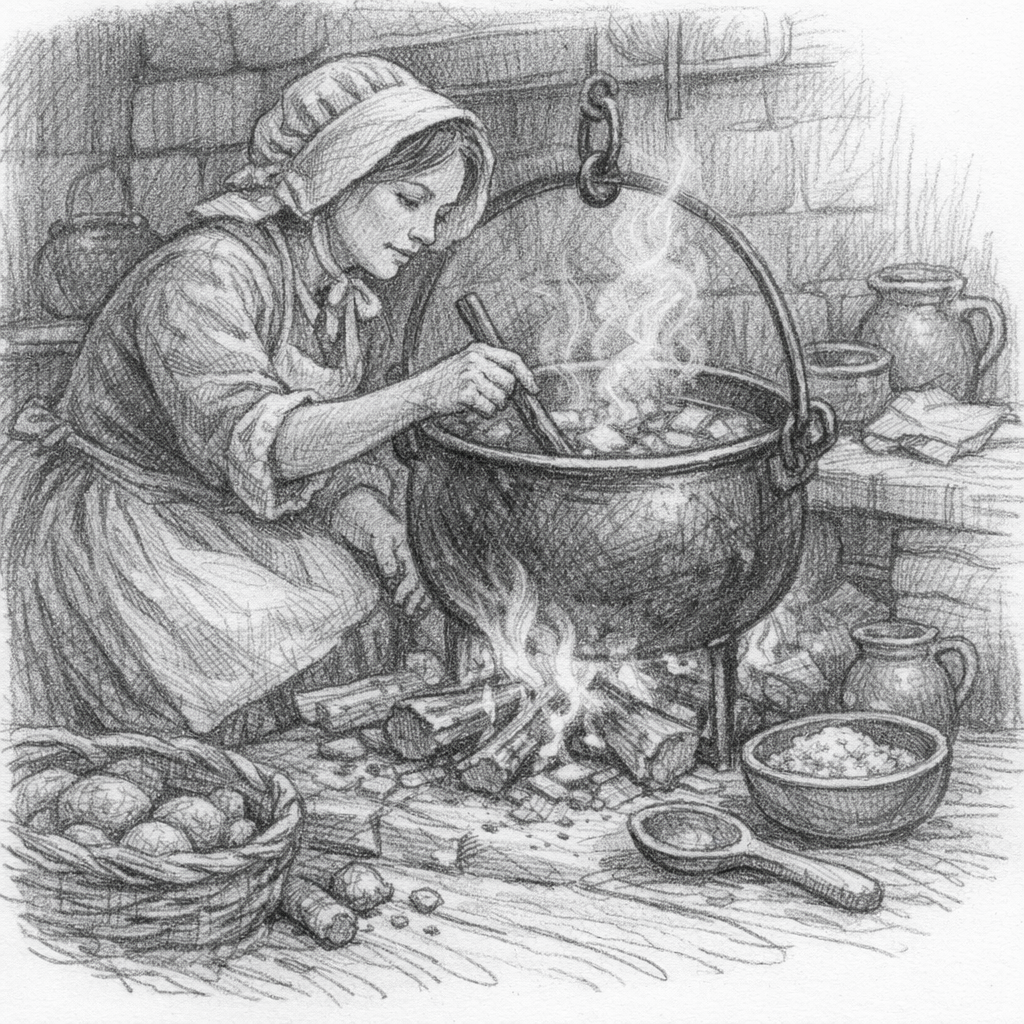
In the rugged 19th‑century frontier, pioneers faced a constant challenge: how to keep food edible through long winters, cross‑country journeys, and unpredictable harvests. Without refrigeration, preservation was a matter of survival. Three techniques dominated pioneer life — salting, smoking, and drying — each reflecting a blend of practicality, resourcefulness, and deep understanding of nature’s chemistry. These methods transformed perishable meats, fish, fruits, and vegetables into durable provisions that could last for months.
Salting: The Chemistry of Survival
Salting was the cornerstone of frontier preservation. Salt was not only a seasoning but a vital commodity — often traded, hoarded, and transported in heavy sacks across the plains. Its power lay in its ability to draw moisture out of food through osmosis, creating an environment hostile to bacteria and mold.
How It Worked
Pioneers used two main approaches:
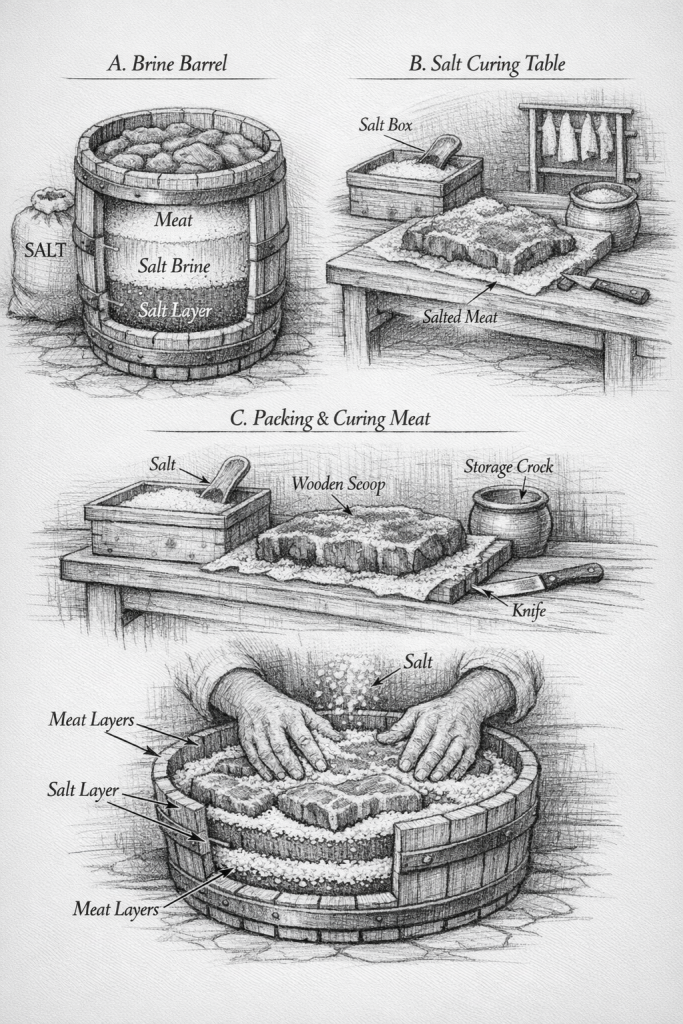
- Dry salting, where meat was packed in layers of salt inside barrels or tubs.
- Brine curing, where meat was submerged in a saltwater solution for days or weeks.
The process began with freshly butchered meat, trimmed and cleaned. Salt was rubbed generously over every surface, then packed tightly in barrels. In brine curing, pioneers mixed salt with water — sometimes adding sugar, peppercorns, or vinegar — and poured it over the meat until fully submerged.
Pros
- Effective and simple: Salt was widely available and required no special equipment.
- Long shelf life: Properly salted meat could last for months, even in warm climates.
- Versatile: Worked for pork, beef, fish, and even vegetables like cucumbers or cabbage.
Cons
- Flavor alteration: Excessive salt could make food overly briny and tough.
- Nutrient loss: Some vitamins leached out during curing.
- Dependence on salt supply: In remote areas, salt shortages could be disastrous.
Smoking: Flavor Meets Preservation
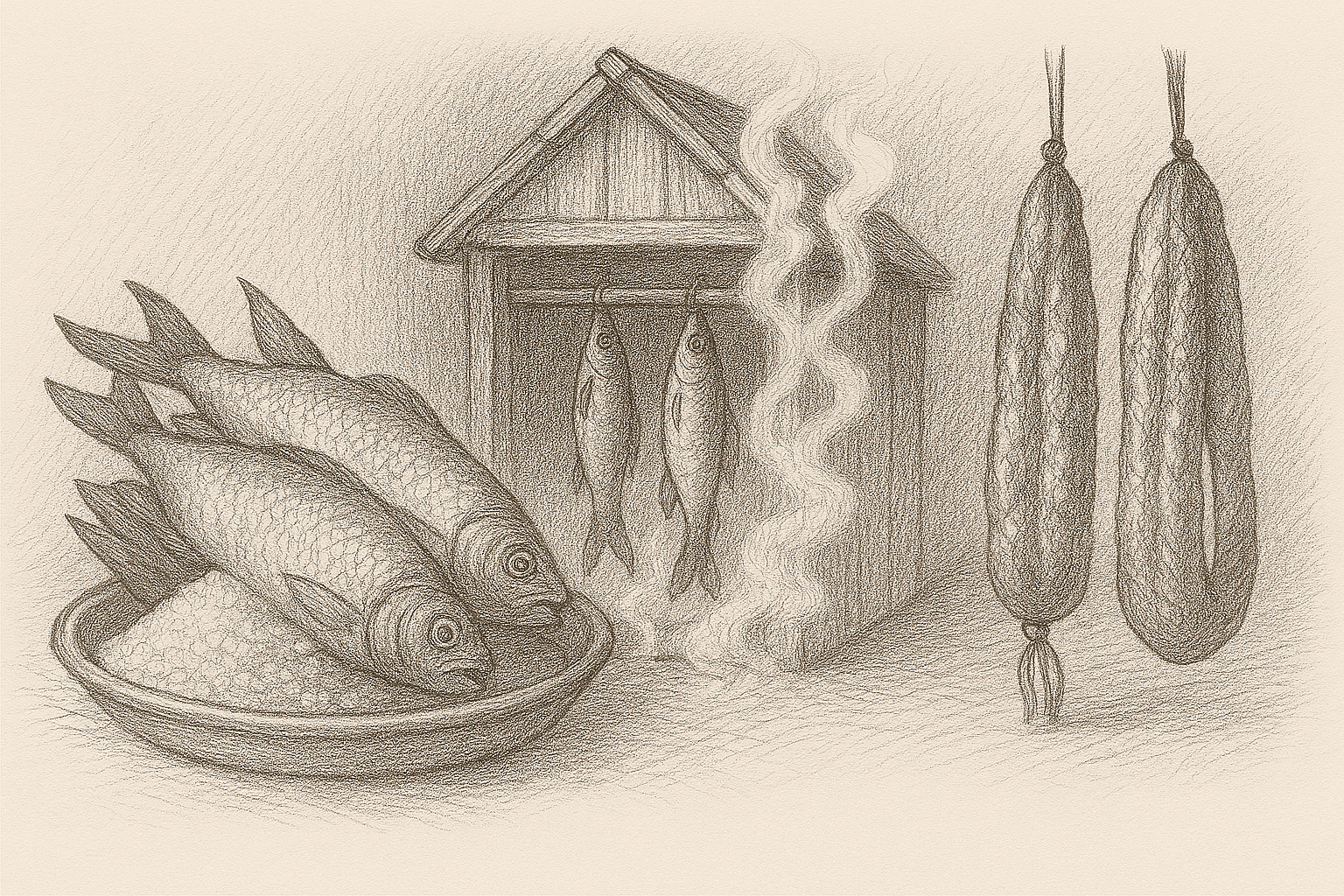
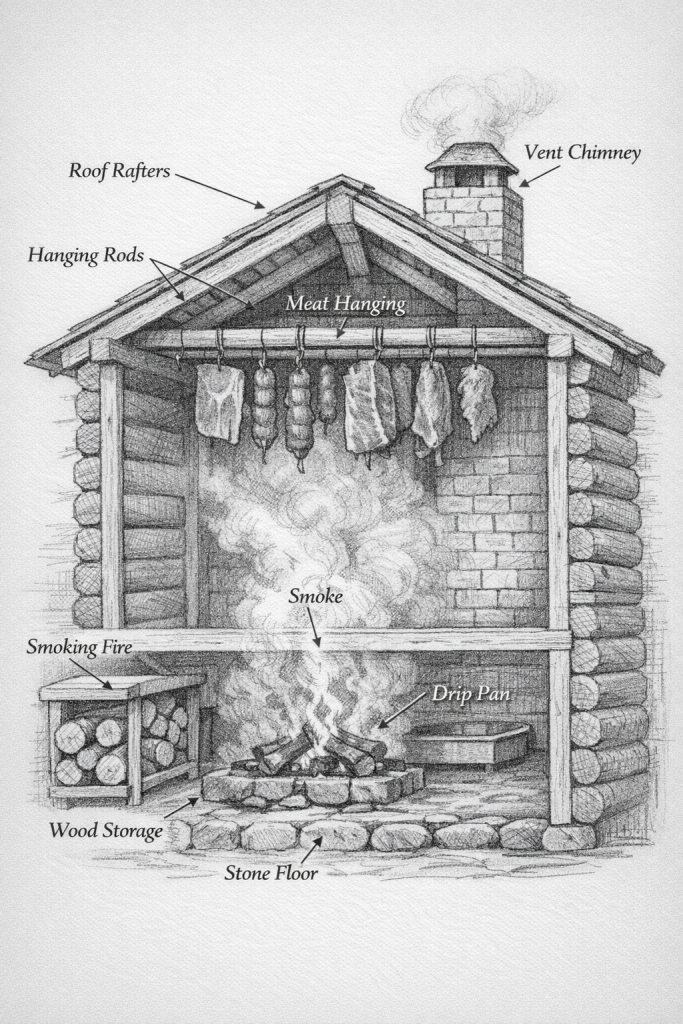
Smoking was both a culinary art and a preservation science. It relied on the antimicrobial properties of smoke and the drying effect of gentle heat. Frontier families built smokehouses — small log structures with controlled airflow — to cure meats over smoldering fires.
How It Worked
The process began with salted or brined meat hung from rods inside the smokehouse. A low fire of hardwoods — typically hickory, oak, or apple — burned continuously for hours or days. The smoke enveloped the meat, infusing it with flavor while drying its surface and coating it with phenolic compounds that inhibited bacterial growth.
Pros
- Enhanced flavor: Smoking added rich, savory notes and deep color.
- Extended preservation: Combined with salting, it could keep meat safe for months.
- Scalable: Smokehouses could handle large quantities at once.
Cons
- Labor‑intensive: Required constant monitoring of temperature and smoke density.
- Infrastructure: Needed a dedicated smokehouse, which took time and materials to build.
- Weather sensitivity: Damp conditions could spoil the curing process.
Drying: Harnessing Sun and Air
Drying was the most ancient and accessible preservation method. It required no salt, no smoke, and no fire — only sunlight, airflow, and patience. Pioneers dried fruits, vegetables, herbs, and even strips of meat to create lightweight, portable food for travel.
How It Worked
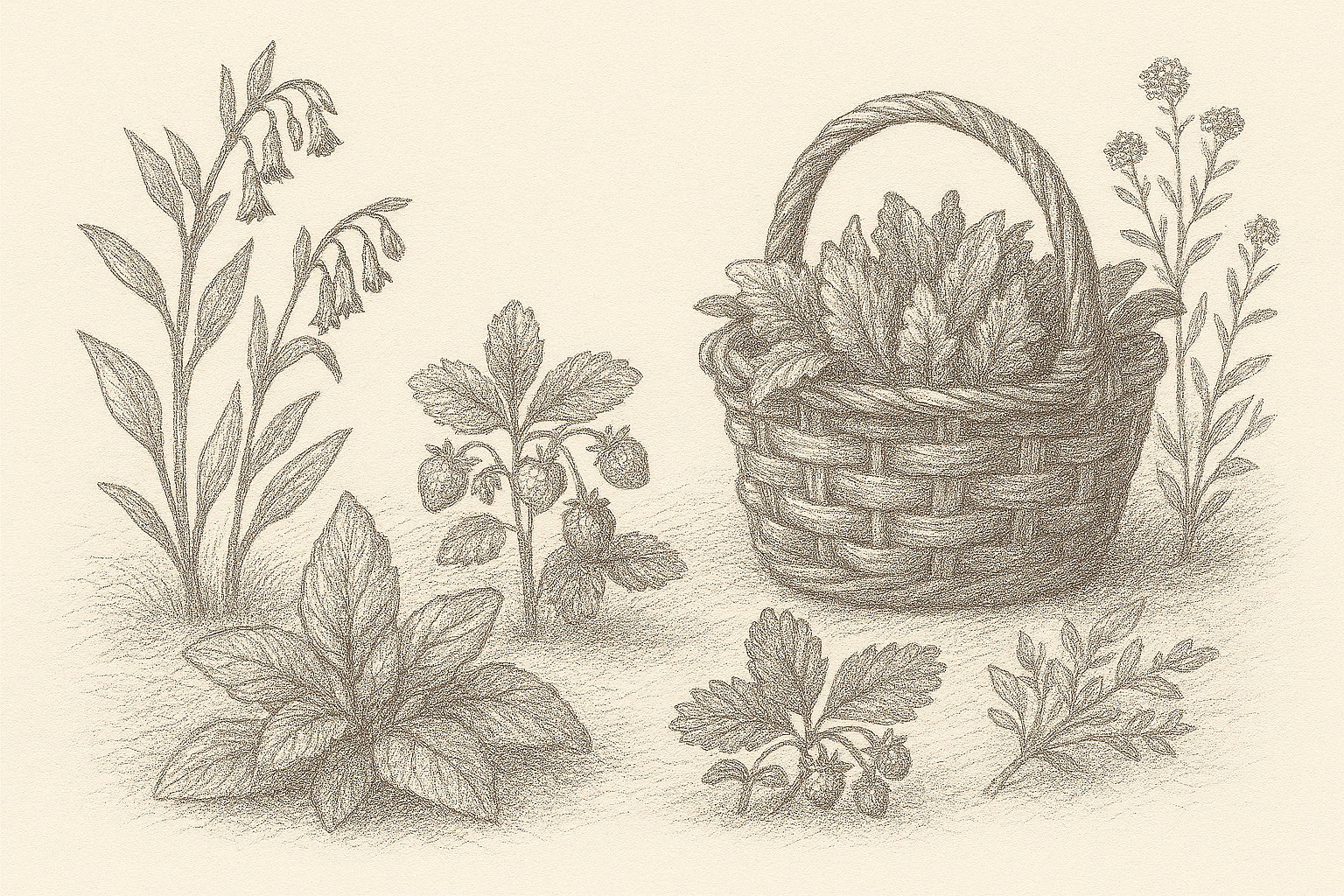
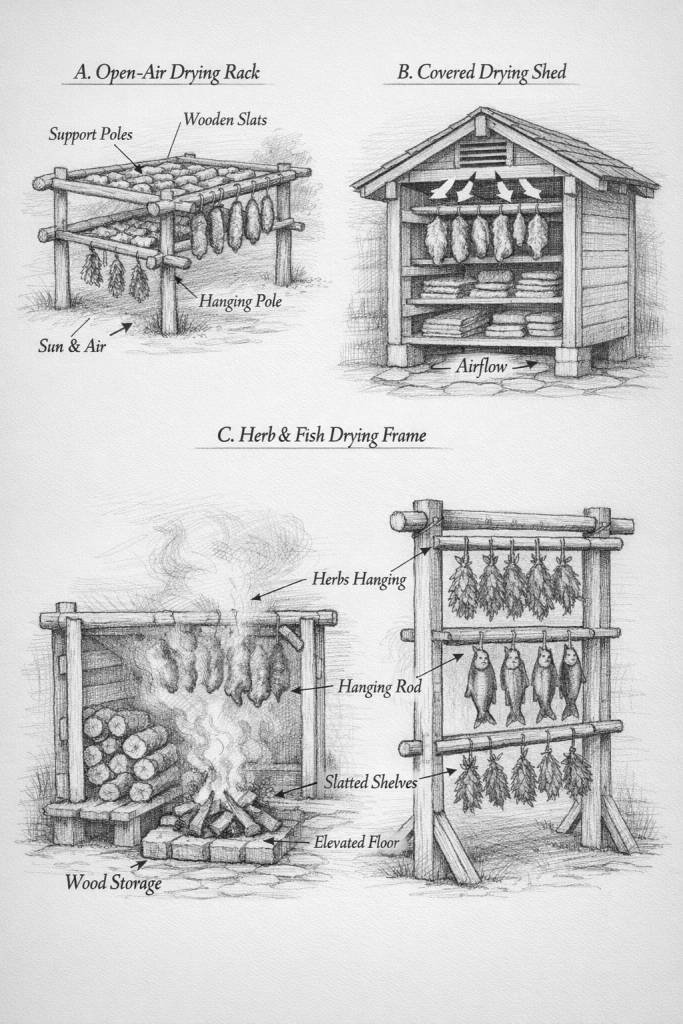
Food was sliced thinly and arranged on racks or hung from poles. In dry climates, open‑air racks were common; in humid regions, covered sheds with slatted walls allowed airflow while protecting from rain. Herbs and fish were often suspended from frames to dry evenly.
Pros
- Low cost: Needed only wood, rope, and sunshine.
- Lightweight results: Dried food was easy to store and transport.
- Nutrient retention: Many vitamins survived the drying process better than salting.
Cons
- Weather dependent: Rain or humidity could ruin batches.
- Slow process: Drying could take days or weeks.
- Risk of contamination: Insects and dust were constant threats.
Combining Techniques
Resourceful pioneers often combined methods for maximum preservation. Meat might be salted first, then smoked, and finally dried for travel. Fish were often brined and sun‑dried, while fruits were lightly salted and air‑dried to deter insects. This layering of techniques reflected a deep understanding of environmental conditions and available resources.
Materials and Tools
Common tools included:
- Wooden barrels and tubs for brining and packing.
- Hooks and rods for hanging meat.
- Salt sacks and scoops for curing.
- Drying racks and sheds built from pine or oak.
- Fire pits and chimneys for smokehouses.
Salt was often sourced from trade posts or natural salt licks, while hardwoods provided steady, aromatic smoke. Every homestead adapted these tools to its climate and available materials.
Cultural and Practical Significance
Food preservation shaped pioneer culture. It dictated seasonal rhythms — slaughtering in autumn, smoking before winter, drying during summer. It also fostered community: neighbors shared smokehouses, traded salt, and exchanged recipes. Preserved foods became staples of frontier cuisine — salted pork, smoked venison, dried apples, and jerky sustained travelers and settlers alike.
Comparative Summary
| Method | Main Use | Pros | Cons |
|---|---|---|---|
| Salting | Meat, fish, vegetables | Simple, effective, long shelf life | Overly salty flavor, nutrient loss |
| Smoking | Meat, fish | Adds flavor, long preservation | Labor‑intensive, needs smokehouse |
| Drying | Fruits, herbs, meat | Low cost, lightweight, nutrient retention | Weather dependent, slow process |
Science Behind the Methods
Each technique worked by reducing water activity, the key factor in microbial growth.
- Salting created osmotic pressure that dehydrated bacteria.
- Smoking introduced phenols and aldehydes that inhibited spoilage.
- Drying simply removed moisture, halting decay.
Together, these methods formed a triad of preservation strategies that balanced chemistry, craftsmanship, and environmental awareness.
Though modern refrigeration has replaced these methods, their legacy endures. Today’s cured meats, smoked fish, and dried fruits owe their origins to pioneer ingenuity. The techniques remain relevant for homesteaders, survivalists, and culinary artisans who value tradition and flavor.
Conclusion
In the 1800s, food preservation was not a luxury — it was a lifeline. Salting, smoking, and drying embodied the pioneer spirit: practical, inventive, and deeply connected to the land. Each method carried its own rhythm and ritual, transforming simple ingredients into sustenance that could endure hardship and time.
Through these techniques, pioneers turned scarcity into security — and necessity into art.