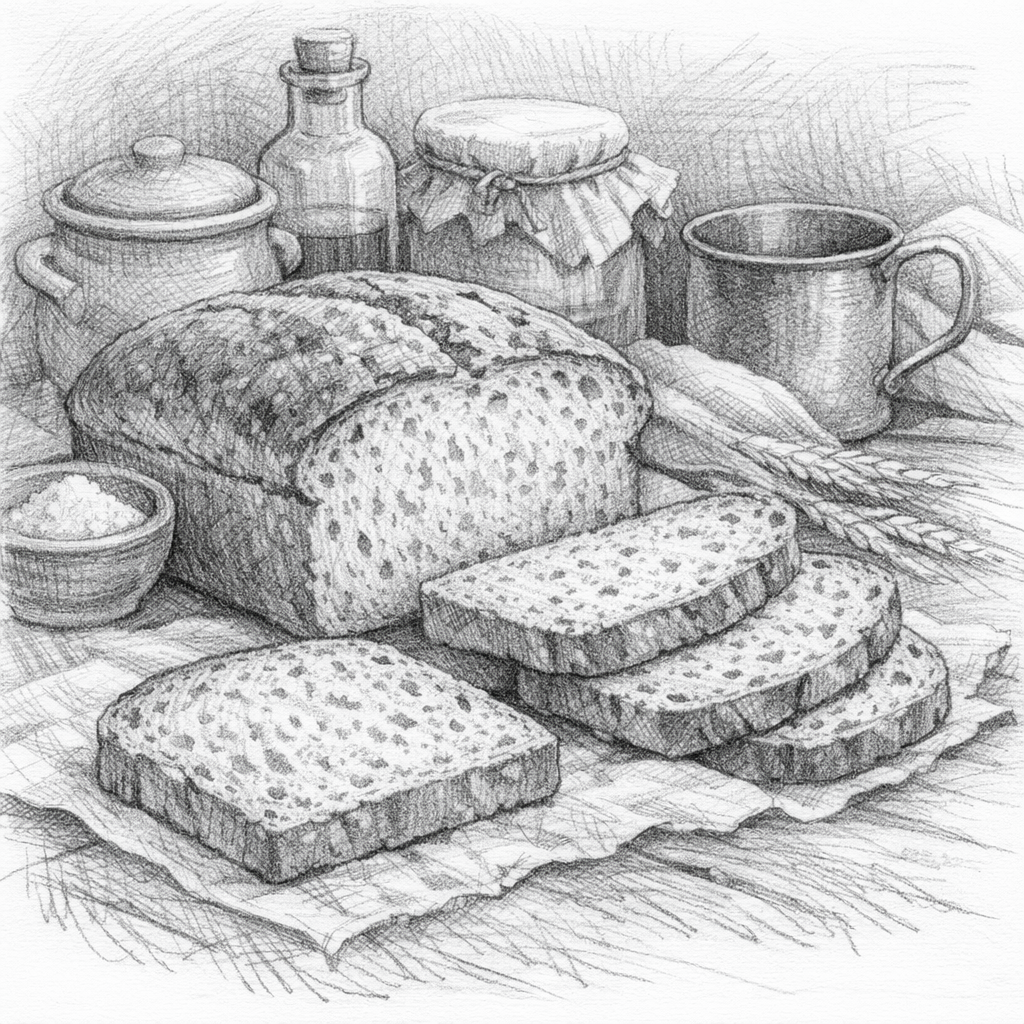
Long before packaged yeast existed, pioneers relied on a fermentation method that feels almost magical today. Salt‑rising bread begins with a warm mixture of cornmeal or potatoes that captures wild bacteria from the environment. The starter smells strong—almost cheesy—but the resulting bread is tender, dense, and deeply flavorful. It was a staple on the trail because it required no yeast and could be made anywhere with a warm spot near a fire. Reviving this recipe reconnects us with a time when breadmaking was an act of patience and trust in nature’s invisible helpers.
Salt-Rising Bread
Equipment
- Electric proofer (Optional)
- Oven
Ingredients
- 1 1/2 C Water
- 1/2 C Cornmeal
- 1 3/4 tsp Salt, divided
- 1/8 tsp Baking soda
- 1 tsp Sugar
- 4 C Milk
- 6-8 C Flour, divided
- 3-4 Tbsp butter
Instructions
- Create your cornmeal starter. The night before you plan to bake your salt-rising bread, heat your water until right before it boils (you should see small bubbles around the sides of the pan). Add the warm water, cornmeal, 1/4 t salt, baking soda, and sugar to a heatproof bowl (there should be enough room in the bowl for the mixture to expand). Cover the bowl with plastic wrap and place it in a warm place to prove at 90-100 degrees (either an electric proofer or your oven).
- Smell it. In the morning, remove the starter from the proofing spot. It should have expanded slightly with small visible bubbles. It should also smell like old parmesan cheese or dirty socks (Don't let this scare you. It's normal and will taste wonderful). If the smell isn't very strong, put it back and let it prove for another hour, then check again. If there's no smell at all, your starter has failed and you'll have to start over.
- When your starter looks and smells ready, add the milk, 1/2 t salt, and enough flour so that the mixture has the consistency of pancake batter (about 4 cups). Cover the bowl with plastic wrap and place it into a container of warm water (between 90 and 100 degrees). Continuously replace cooling water with warm water until the mixture has doubled in size(2-4 hours).
- At this point the mixture should be very bubbly and moved up the sides of the bowl. Add your mixture into a stand mixer, along with the remaining teaspoon of salt, the butter, and enough flour to make a slightly sticky dough (about 2-4 cups). Knead until smooth (8-10 minutes).
- Divide the dough into three greased loaf pans, cover, and allow them to rest until the dough has doubled in bulk (about 1 hour).
- Bake the loaves at 375 degrees for 30-40 minutes. Remove from the oven, butter the crusts, and let cool completely.
Notes
Loaves are good for about a week on the counter. You can also freeze them to maintain their freshness.